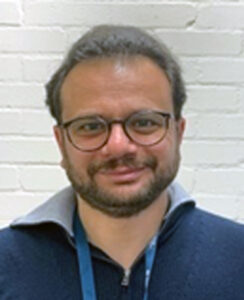
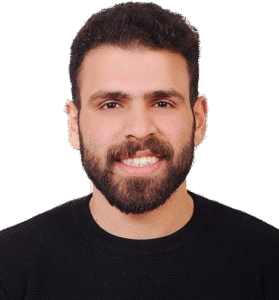
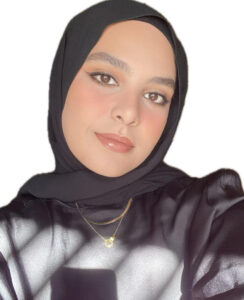
Dr. Shamass is a Senior Lecturer in Structural Engineering at Brunel University London’s College of Engineering, Design and Physical Sciences. His expertise covers sustainable construction, advanced materials, and structural performance. He has led consultancy projects on innovative systems including Basalt FRP, low-carbon concretes, bamboo fibre–reinforced composites, and straw bale structures. His research spans buckling of shell structures, stainless steel and composite structures, fatigue performance, fibre-reinforced polymers, reinforced concrete, seismic design, and the application of machine learning (ML) in structural engineering. A key strand of his work focuses on sustainable materials, including the utilisation of construction and industrial waste, as well as the development of cement alternatives. Currently, his research is centred on low-carbon concretes, structural reuse, circular economy, alkali-activated and calcined clay cements, carbon sequestration in concrete, and interdisciplinary ML applications. His overarching goal is to produce design guidance that supports safe, cost-effective, and environmentally responsible construction practices.
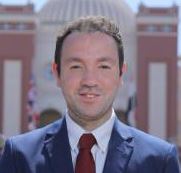
Dr. Salem earned his BSc. in Structural Engineering from Ain Shams University in 2009, followed by MSc. from the same school in 2014. Later Dr. Salem completed his PhD. from McMaster University, Canada in structural resilience in 2018. Dr. Salem is elected as board member for the Egyptian Society of Civil Engineers. Moreover, Dr. Salem is a member of the Risk and Resilience Measurements committee, and the Social Science, Policy, Economics and Education Decision committee for the American Society of Civil Engineers. He is also a member of the SEI blast protection of buildings standards committee who are responsible to issue the ASCE blast protection standards and the research and awards committee for The Masonry Society. During his academic career Dr. Salem received several international awards including the Engineering Mechanics Institute Objective resilience award in 2016 and the outstanding thesis award from The Masonry Society in 2019. Aside from his academic career, Dr. Salem has been involved in the design and revision of more than thirty infrastructure, industrial, and residential projects.
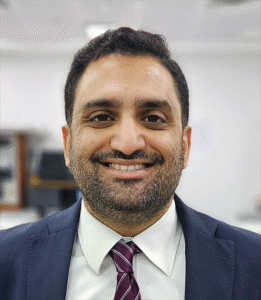
Ahmed A. Torky, an Assistant Professor of Engineering at The British University in Egypt (BUE), combines expertise in AI and structural engineering with a deep passion for software development and deep learning. His groundbreaking research enhances structural analysis models and implements AI to tackle engineering and medical challenges. Dr. Torky has authored numerous papers on BIM limitations, high-performance computing, and deep learning for optimization. At BUE, he inspires students through professional courses in artificial intelligence and Python programming, bridging the gap between theory and practical application.
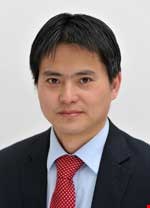
Xiangming is a Professor and Head of the Department of Civil & Environmental Engineering at Brunel University of London, specializing in Construction Materials, Technology, and Structural Engineering. His research focuses on a wide range of topics, including advanced concrete technologies such as extrusion, 3D printing, and additive manufacturing. He is particularly interested in low-carbon, energy-efficient materials, including cementitious materials with encapsulated phase-change materials (PCMs), magnesium-based cements, and geopolymer cements made from sustainable resources like metakaolin, calcined clay, and industrial by-products.
Xiangming also investigates the valorization of construction and demolition waste, the use of nanotechnology in cement-based materials, and the modeling of cement hydration and rheology for 3D printing and extrusion. In structural engineering, his work includes seismic testing, the design of steel-concrete composite high-rise buildings, and multi-hazard mitigation of structures. He has also developed innovative methods for fracture testing and shrinkage cracking in concrete and has worked on impact analysis of fibre-reinforced concrete.
By bridging the fields of construction materials and structural engineering, Xiangming’s work contributes to the development of sustainable, high-performance building materials and advanced structural systems.
Ahmad Esam Khalil is currently an Assistant Lecturer in Civil Engineering at the British University in Egypt. He earned his Bachelor’s degree in Civil Engineering from the British University in Egypt, followed by a Master’s degree in Structural Engineering from Cairo University. He is now pursuing his PhD in Structural Engineering at Cairo University
His research focus on the analysis of building structures and optimization.
Nada Salah ElDesouky is a Teaching Assistant at the British University in Egypt (BUE). She earned her Bachelor’s degree in Construction and Building Engineering from the Arab Academy for Science, Technology and Maritime Transport (AASTMT) in 2021, where she is currently pursuing her Master’s degree. Her research centers on applying computer vision to construction engineering, with a strong interest in leveraging Artificial Intelligence and Large Language Models (LLMs).